

ProSaDi Sub-project 3: Cowrie shells (Collection Research)
ProSaDi Sub-project 3: Cowrie shells (Collection Research)
Project team
Prof. Dr. Dagmar Freist
Prof. Dr. Julia Wurr
Prof. Dr. Monika Sester
Prof. Dr. Petra Löffler
Prof. Dr. Sebastian Vehlken
Prof. Dr. Thomas Brinkhoff
Prof. Dr. Thomas Luhmann
Dr. Ursula Warnke
Louise Adams
Anastasia Bauch
Vincent de Boer
Fiona Möhrle
Oliver Kahmen
Dietje Ziemer
Armelle Devillez
Sebastian Roddau
Cowrie Shells in Space and Time (Critical Collection Research)
For centuries and across cultures, cowrie shells (Cypraeidae) were used, traded, and processed in many different ways. Sub-project 3 brings together perspectives from the fields of history, cultural and media studies in order to trace the historical meanings attributed to cowrie shells, the contexts in which they were used, and the shifts in meaning which they have undergone up until the present.
The sub-project focuses on the spatiotemporal constellations in which cowrie shells circulated, on the overlapping discourses in which they were embedded, and on the contexts of use as well as cultural practices (c. 1600–1900). Central to this research is a critical reflection on colonial knowledge production and archives, and the development of a methodology in collaboration with non-European scholars. The sub-project furthermore analyses the circulation and remediation of cowrie shells across different media – photographs, digitised materials, artistic works or 3D models – and the role of visual and literary representations in decolonial knowledge practices as well as contemporary uses of cowrie shells in fashion, jewellery, and literature.
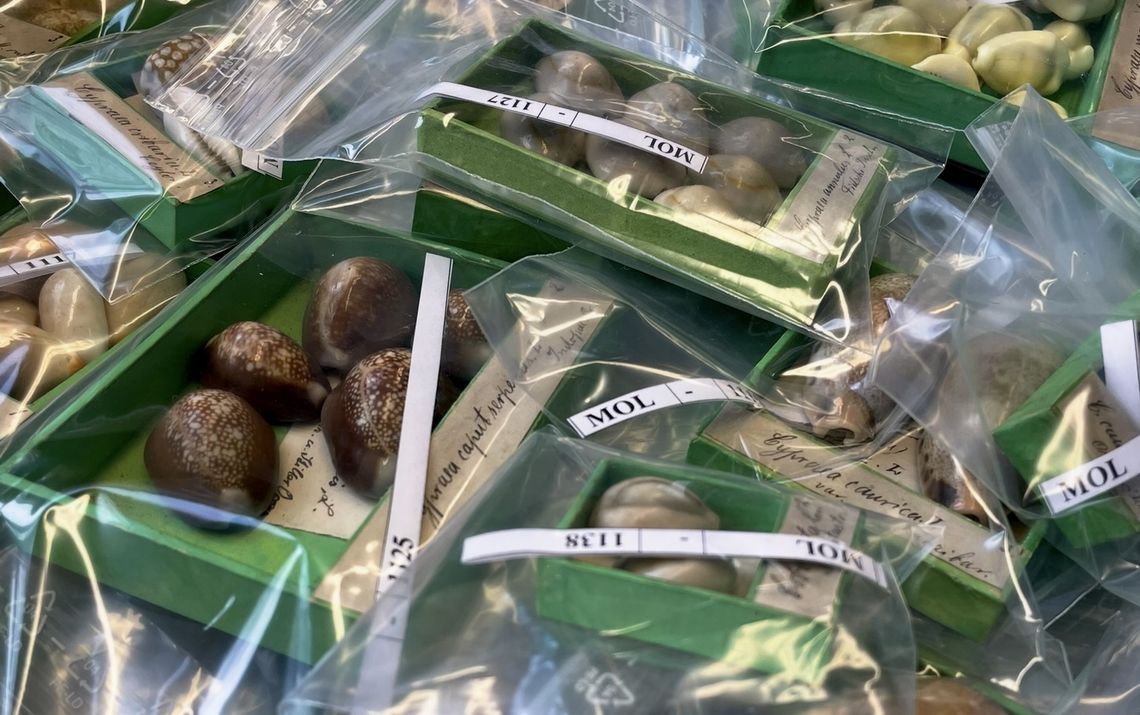
In collaboration with representatives of the communities of origins and through AI-supported methods of 3D-digitisation and analysis, the project also aims to provide critical context for those cultural belongings at the Landesmuseum für Natur und Mensch Oldenburg (in English: State Museum Nature and Human Oldenburg) which feature cowrie shells. One step is to re-examine Western knowledge systems and critically reflect on the use of terms such as ‘collection’ for holdings from colonial contexts. On a technical level, visualisation and interaction tools will be developed to make the data accessible.