

The project
The project
Science Space "Digital Provenance and Collection Research" (Provenienz- und Sammlungsforschung Digital (ProSaDi))
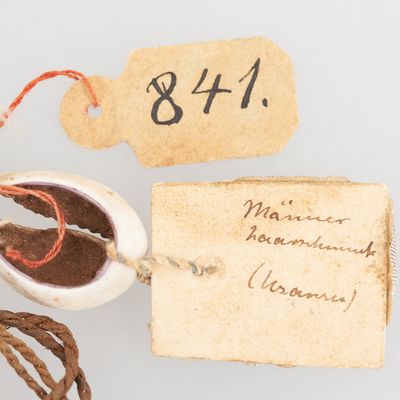
Dealing with gaps, uncertain information, and biases in documentation is an epistemological, technical, and practical challenge for provenance and collection research, as well as AI-based research and data modeling in the cultural heritage domain. Finding a methodological solution to this set of interwoven challenges calls for a collaborative research perspective, enabled through the format of the Science Spaces Lower Saxony (Wissenschaftsräume Niedersachsen).
Using the example of “displaced objects” from colonial contexts in museum collections of Lower Saxony, the Science Space Digital Provenance and Collection Research brings together the disciplines of history, cultural, media and provenance studies, as well as engineering and geoinformation sciences. It aims to develop and test methods and technologies to support digital knowledge generation processes and to make them available for long-term, sustainable use through existing data infrastructures in the cultural heritage field. The involvement of partners from communities of origin is essential.
A complementary concept for research-oriented teaching at the intersection of AI and cultural heritage proposes transdisciplinary modules for the training of students and their direct involvement in research. The participation of state museums, archives, and the Lower Saxony Provenance Research Network ensures that practice-orientated questions are also pursued and that the results of the Science Space are used in museum and archive collections in the long term.
The Science Space thus combines transdisciplinary research, support of emerging digital humanities researchers, research-oriented teaching, real-life applicability, and the development of long-term, sustainable models for digitally supported provenance and collection research.

ProSaDi Sub-project 1: Establishing the Science Space
In preparation for subprojects SP2, SP3, and SP4, relevant methods and theoretical frameworks will be identified, existing data and source materials will be reviewed and made accessible, and current repositories, models, and technologies will be evaluated for their suitability within the Science Space.
These activities will take place during the first year of the project and will include interdisciplinary working meetings and workshops hosted at the different partner institutions.
ProSaDi Sub-project 2: PAESE 3.0 (Provenance Research)
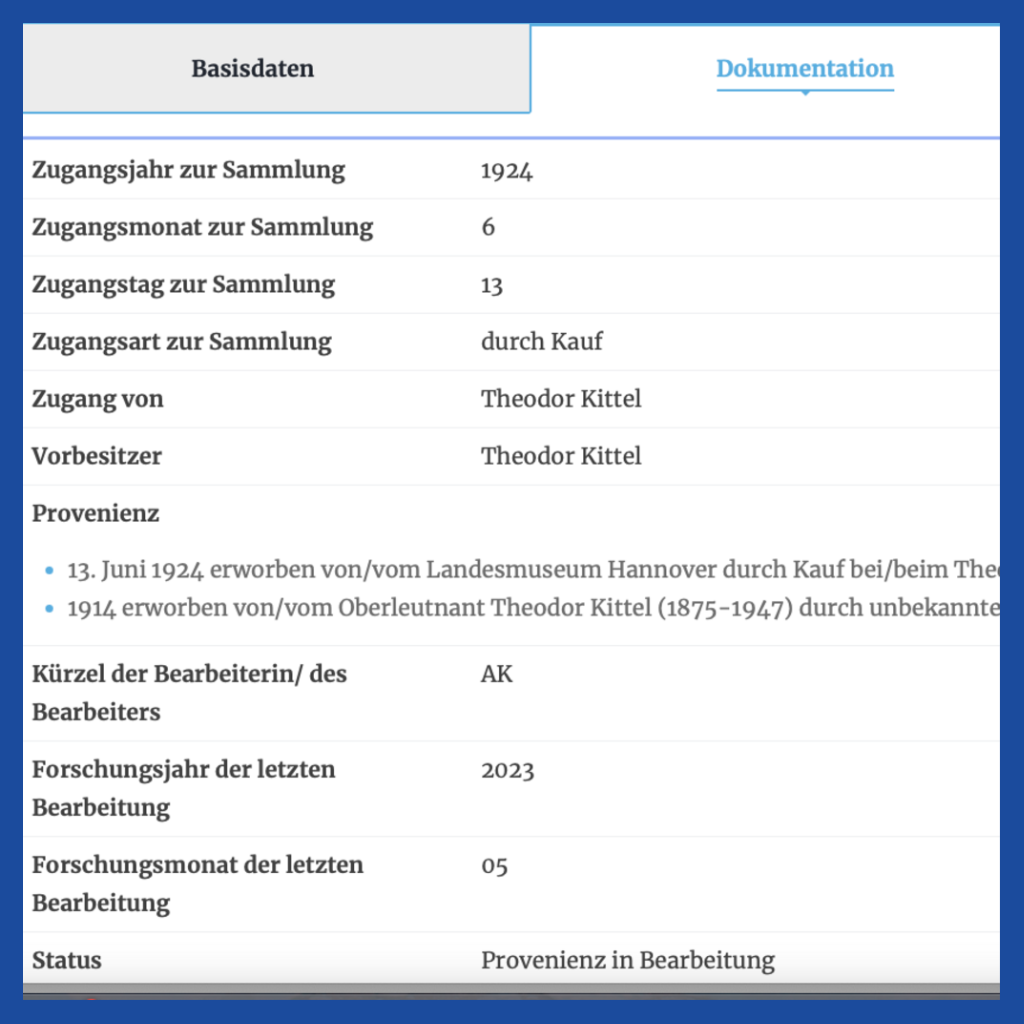
This sub-project investigates PAESE objects and data with regard to their geographical contexts, cultural attributions, and processes of appropriation, decontextualization, and musealization. In collaboration with researchers from communities of origin, these data will be examined, contextualized, and structured within a model framework. The aim is to enable future cross-museum and cross-database linking and analysis of PAESE-related collections and data.
Historical provenance records are being structured and made accessible through AI-based methods. The research is accompanied by a reflexive methodological perspective and is designed to be transferable to sub-project 3, where the approaches will also be applied to and tested on Kauri objects.

ProSaDi Sub-project 3: Cowrie Shells (Collection Research)
This sub-project examines cowrie shell objects, their changing meanings and contexts of use across different places and historical periods. It draws on historical and material culture approaches to analyse how cowries have been collected, exchanged, and interpreted over time. In collaboration with communities of origin, the cultural belongings are also reflected upon from postcolonial and media-theoretical perspectives, with AI-based methods used to semantically describe and visualize the results.
A second focus is the development of new photogrammetric methods for the digital analysis of cowrie shell objects. The aim is to create a standardized description of objects and surfaces that can be integrated into the project’s model. Based on this, AI methods will be explored for identifying and linking similar objects across collections.
ProSaDi sub-project 4: Research-based teaching and professional training
The objective of promoting early-career researchers is addressed in sub-project 4 by continuously integrating master's students into the Science Space as Student Research Fellows.
In addition, a certificate programme titled „Digital Provenance and Collection Research” will be developed and piloted to provide research-based professional education in the form of micro-degrees.
ProSaDi Sub-project 5: Conceptual Modeling and Perspectives
This subproject evaluates, assesses, and integrates the results of sub-projects 2, 3, and 4 with the aim of developing conceptual models applicable beyond the Science Space.
These models will be transferred into research practice and shared with the wider academic community. In addition, future research priorities will be identified, new and adapted study programmes developed, and a sustainable long-term structure for Digital Humanities in Lower Saxony designed.